

1964
Going formal
A staffed council begins its work.
Two years on, the council was given a budget, an office, and full-time staff — and the work that had been carried in the margins moved to the centre of civic life.
Loading…
We are the oldest local non-governmental organisation in Darkhan-Uul — a member-led federation that has, without interruption, organised, trained, advocated for, and stood with the women of this province since 21 October 1962.
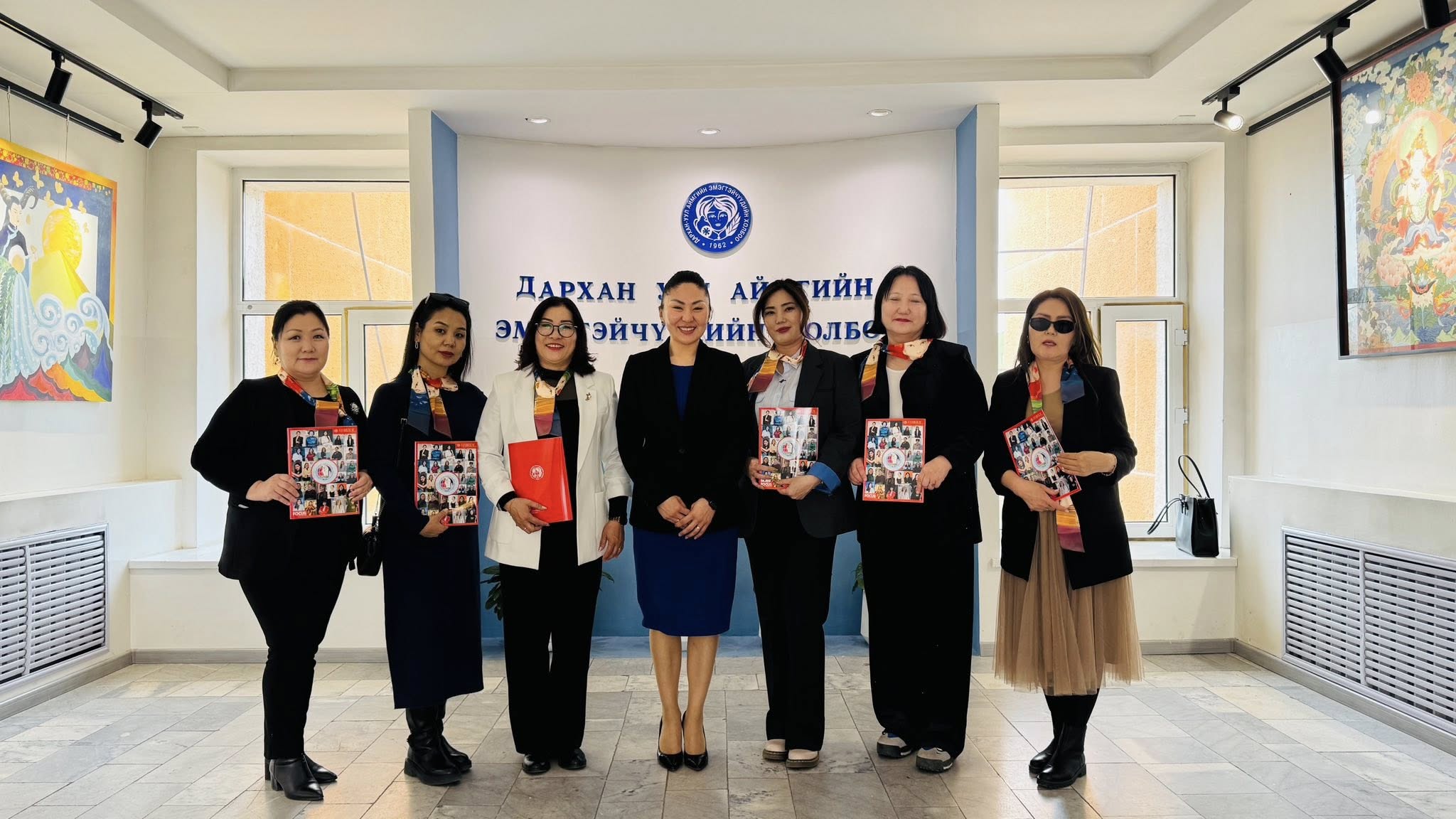
The "Darkhan-Uul Women's Federation" is a public-benefit NGO that has operated continuously for sixty-three years, protecting and developing the rights and interests of girls and women, and organising socially-oriented educational work across the province.
Darkhan-Uul today is home to roughly 104,551 people across four soums and twenty-six bags — and women make up just over half of them. In the provincial centre, women number 43,600 of 84,700; in the rural soums, 4,600 of 9,600. Of the working-age population of 32,852, fourteen thousand three hundred are women.
Around those numbers, the Federation has built a working structure: fifteen Management Councils, three Supervisory Councils, three working offices, twelve instructors, and women's councils in every district of Darkhan, in Khongor, Sharyn Gol and Orkhon soums, and in twenty major employers — each council with its own chair and nine to eleven leaders.
Whether you are a herder, an entrepreneur, or a student — we are beside you.
— Darkhan-Uul Women's Federation
On 21 October, the first women's conference of the young industrial city established a non-staff council under the local Party Committee. It would meet on weekends, in borrowed rooms, with a handwritten charter.
Two years on, the council was given a budget, an office, and full-time staff — and the work that had been carried in the margins moved to the centre of civic life.
Through twenty-five years of community fundraising and the relentless initiative of Darkhan-Uul's women, the only building of its kind in Mongolia was built and dedicated — and continues operating to this day.
With the end of the one-party era, the council shed its political affiliation and re-constituted itself as an independent public organisation — answerable, then as now, to its members.
The council's mandate widened from the city of Darkhan to the entire province of Darkhan-Uul, absorbing the women's councils of Khongor, Sharyn Gol and Orkhon soums.
The organisation was re-registered as a public-benefit NGO under Mongolia's new civil society law. The name — the Darkhan-Uul Women's Federation — has been carried, unchanged, for the twenty-eight years since.
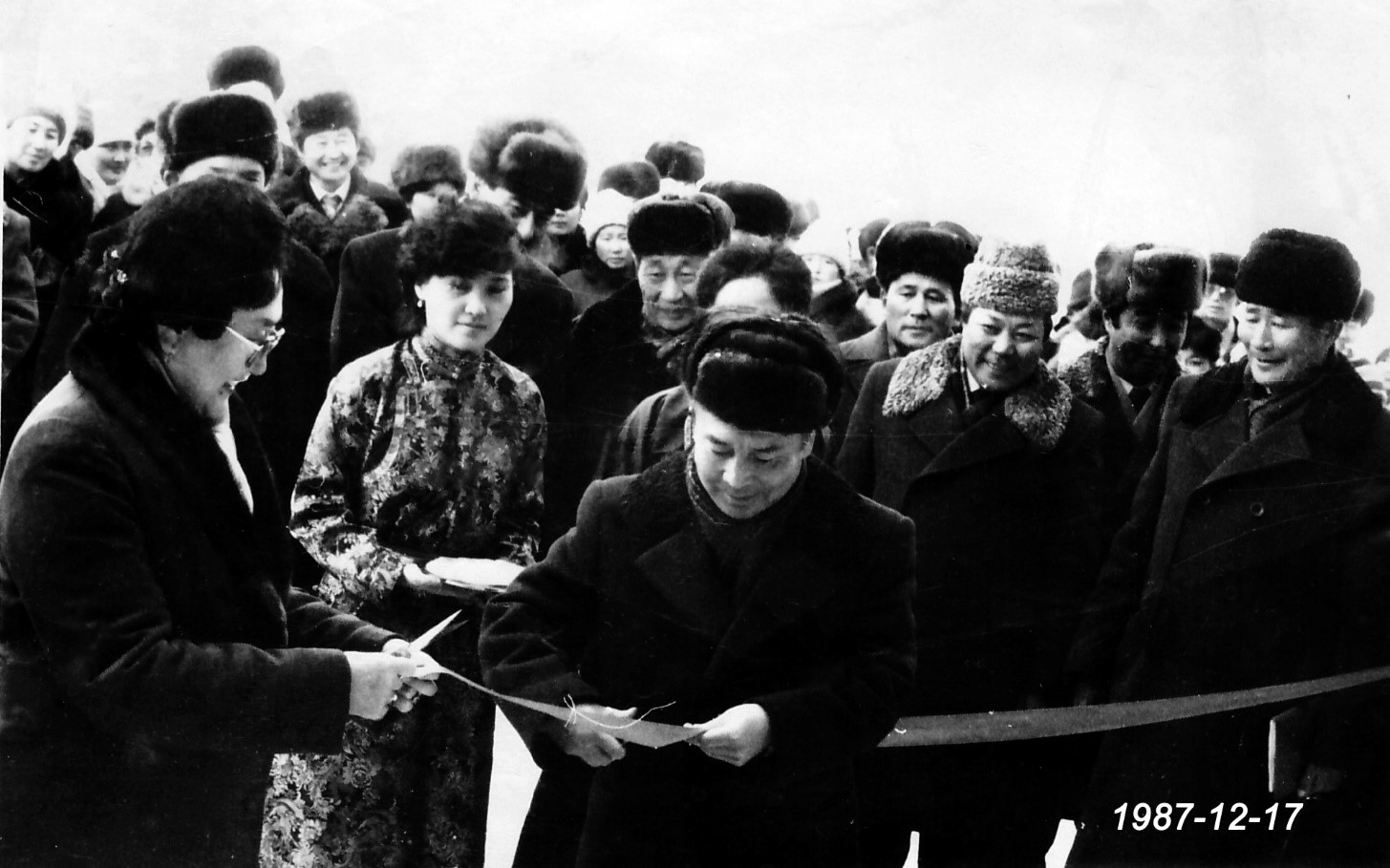
In an era when civic buildings were planned in capitals and handed down, the women of Darkhan-Uul went the other way. They organised public fundraising drives, contributed their own labour, lobbied the province, and built a permanent home for their work.
Almost forty years later, the Palace still does what it was built to do — host weddings and conferences, run training rooms and clinics, archive the Federation's history, and stand, plainly, as proof that institutions can be built from the bottom.
The Federation is governed by its members, structured for accountability, and present in every district of the province. The numbers below describe the working organisation as of 2025.
— Each council is led by a chair and supported by nine to eleven elected leaders.
To be a nationally leading women's organisation.
To express, protect, and develop the common rights, interests, and concerns of women — regardless of ideology, social status, beliefs, ethnicity, wealth, or position.
Equal opportunity — equal development. Smart women — smart society.
Take an active part in resolving questions tied to the role, position, and well-being of mothers, women, and girls in society and family — and press for the laws that protect them to actually be enforced.
Support the introduction of gender-sensitive policy, budgeting, and planning methods at the provincial and local level.
Back women leaders at every level of election and broaden women's political representation across Darkhan-Uul.
Run projects within our core directions in cooperation with international organisations and development agencies.
Widen our ties with women's movements and organisations at national, regional, and global level — and turn them into shared work.
Run programmes that strengthen the economic position of women — through cooperatives, micro-enterprise support, and access to finance.
Train, mentor, and equip girls and women with the practical skills they need to enter and stay in good work.
Reduce gender-based discrimination and stop gender-based violence — through legal aid, prevention, and survivor support.
Build a culture of informed, engaged citizenship through education, public dialogue, and the Federation's magazines and programmes.
Conduct surveys and field research so that public monitoring, by and of citizens, sits at the heart of how decisions are made.
We are not affiliated with any political party, government body, or commercial interest. Our decisions are made by members, for members.
Every programme is documented, every tugruk accounted for. We publish an annual report and a full financial audit.
Our membership is open to all women regardless of age, background, profession, or location — from the city to the most remote bag.
Sixty-three years without interruption. We plan for the long term and build institutions that outlast any single programme or president.
Whether as a member, a volunteer, or a partner — there is a place for you in the work.